



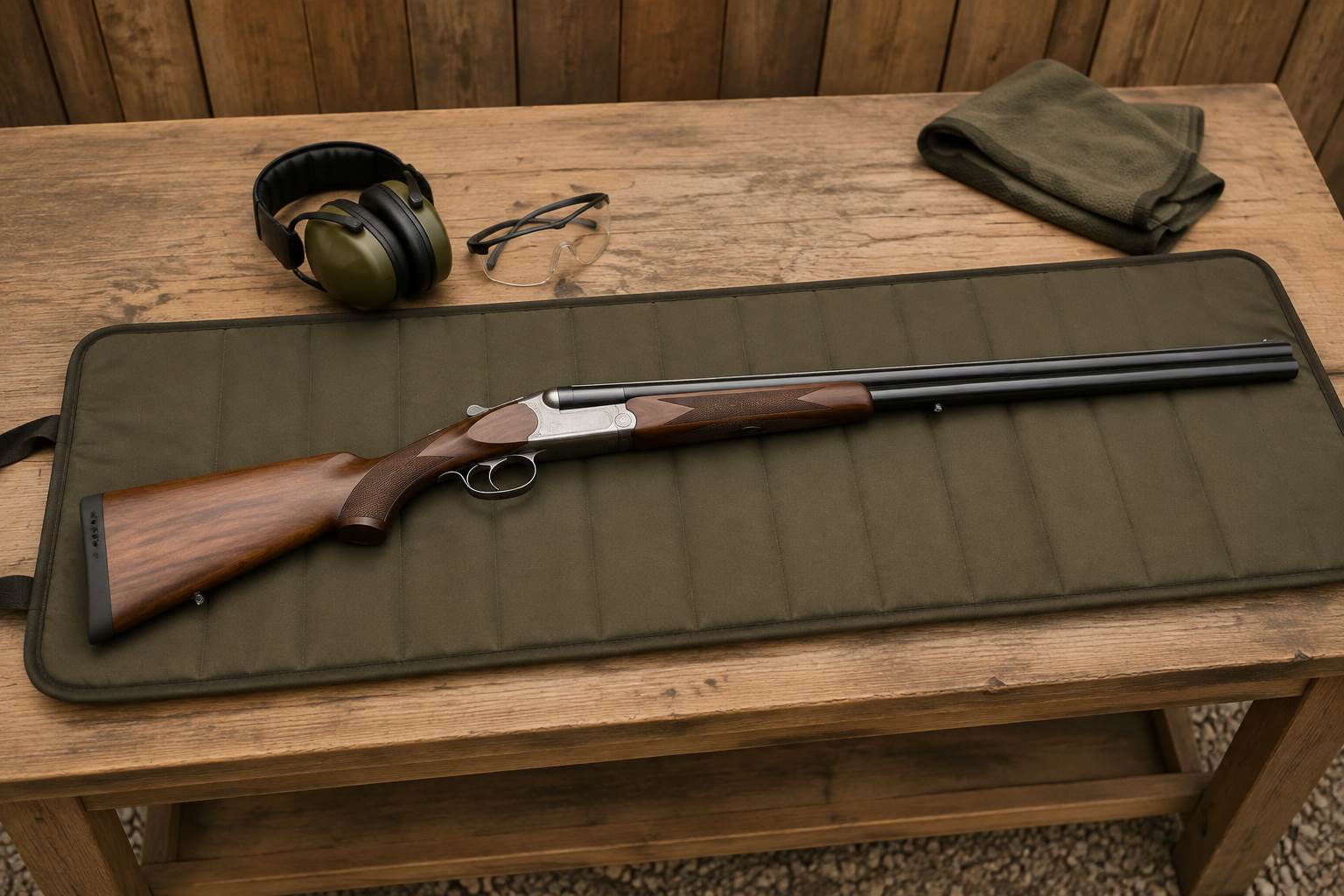

Before loading the vehicle decide whether the firearm is ready to travel. Check more than ammunition and a license or club booking. Confirm that the gun is unloaded, mechanically sound, suitable for the planned use and accompanied by equipment you understand. A calm inspection at home gives you time to stop seek help or change plans. At the range distractions make concerns easier to miss.
Make the go-or-no-go decision before leaving
Use a scenario as the test: you are preparing a shotgun for clay practice before an upcoming bird hunt. The case is packed the weather is manageable. You notice a faint rough spot when opening the action. Do not work around it because the trip is organized. Set the gun aside until the cause can be identified safely.
A go decision requires conditions. The firearm must be unloaded. The action must operate as intended. The barrel must be unobstructed. Controls must behave normally. No part should show damage that could affect operation. If you cannot explain a sound, stiffness, crack, loose component or change in handling the decision is no-go. A qualified gunsmith or the manufacturer should diagnose the problem. Improvised repairs are not a substitute for expertise.
Cancelling a session is inconvenient. Continuing with a firearm can create a problem that becomes harder to control.
Start with a firearm and a clear workspace
Choose a well-lit area away from ammunition and distractions. Point the muzzle in a direction. Open the action. Visually and physically confirm that the chamber and relevant loading areas are empty. Keep ammunition separate until the inspection is complete. If the gun has been stored in a case look for moisture, debris or accessories that have shifted against it.
Do not rely on memory or the condition in which you believe the firearm was stored. Treat every handling session as a safety check. For a break-action shotgun inspect the action, chambers, hinge area and locking surfaces without forcing anything. For designs follow the makers instructions for safe unloading and inspection rather than applying a method from a different firearm.
The goal is not to disassemble the gun on the kitchen table. Identify concerns and confirm that basic operations are normal. Stop if a component appears damaged or you are unsure how to proceed.
Read wear as a decision signal
A clean exterior does not prove that a firearm is ready for use. Look for wood loose screws, dents, bulges, deep corrosion and unusual marks around the action or barrel. Check that the stock and fore-end are secure. Check that a sling, case hardware or other accessory cannot interfere with handling. A loose part may be a maintenance issue or evidence of a larger problem. The inspection tells you when to ask for help not how to make a repair.
The bore deserves attention. It should be clear before use. A light inspection can reveal residue, rust or an object left after storage or cleaning. Never attempt to clear a suspected obstruction by firing a cartridge. Use the firearms manual or qualified professional guidance especially when the obstruction is not plainly removable through safe procedures.
Follow the manufacturers maintenance instructions. Excess lubricant, incorrect cleaning tools and aggressive products can create problems. Clean appropriate surfaces. Protect against storage-related corrosion. Avoid changing parts or dimensions unless a qualified professional has determined that the work is suitable.
Match equipment to the day not the wish list
The clay session may expose another issue: the equipment is not right for the planned activity. Ammunition must be compatible with the firearm and range rules. Select. Hearing protection before arrival rather than borrowing it at the last moment. Weather, distance from the vehicle and the amount of walking also affect what belongs in the kit.
For bird hunting preparation has a safety role beyond convenience. Carry what you can manage securely. Keep cartridges protected from moisture and confusion. Confirm any hunter education, land permission or local conditions through current official sources. Laws and regulations can change by location and season. An old checklist, internet comment or familiar routine is not confirmation.
Apply the restraint to purchases. A shotgun, case, choke, sling or cleaning tool should solve a defined need and be compatible with the firearm and intended use. If you cannot verify fit, function or lawful use pause and consult the manufacturers documentation or a qualified dealer or gunsmith.
Use a checklist at the door
Keep the checklist brief enough to use every time. It should support judgment not replace it:
– Firearm is unloaded; chamber and loading areasre checked.
– Barrel or bore is clear with no unexplained obstruction or damage.
– Action, safety controls and other user-operated parts behave normally.
– Stock, fore-end, fasteners and accessories are secure.
– Ammunition is correct for the firearm and permitted at the planned venue.
– Eye and hearing protection, a transport case and basic range items are ready.
– Current range, hunting and transport requirements have been verified through official sources.
– Any uncertainty means the firearm stays out of use until advice is obtained.
Do the five checks before packing ammunition. Separating inspection from loading helps prevent a rushed transition.
Know when the plan should stop
A -range routine cannot certify a firearm or compensate for unfamiliarity. If the owner has not learned the controls cannot identify the ammunition or feels pressured to proceed a supervised lesson or qualified inspection is the better next step. The same applies after a drop, impact, abnormal discharge change in recoil or unexplained mechanical behavior.
The useful outcome may be an empty case, in the vehicle and a postponed session. That choice protects people nearby. It helps prevent firearm damage. It gives you time to make a maintenance or buying decision. Review the routine when your firearm, ammunition, range, hunting conditions or local requirements change. Confirm rules through the relevant official authority before heading out.